
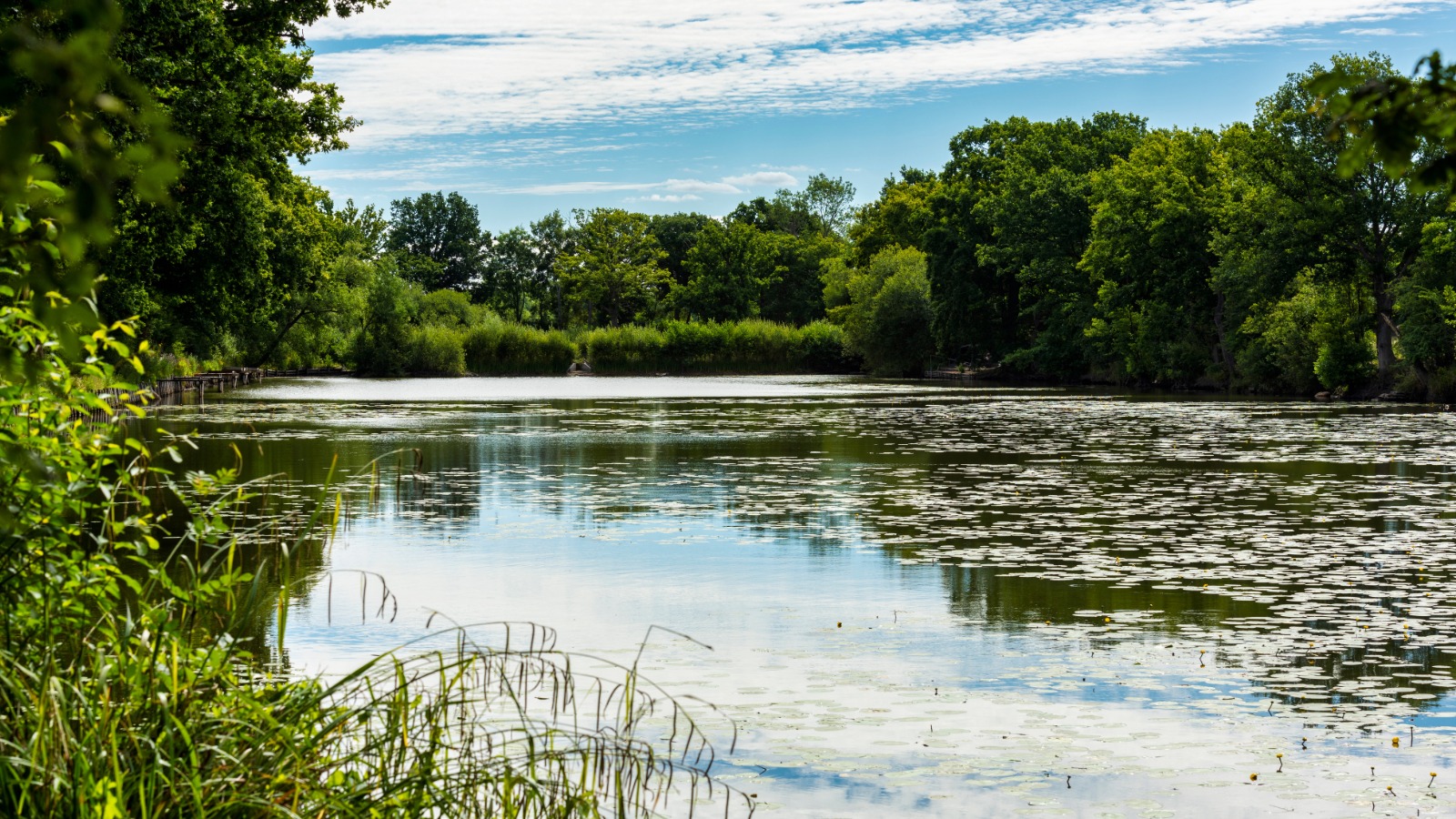
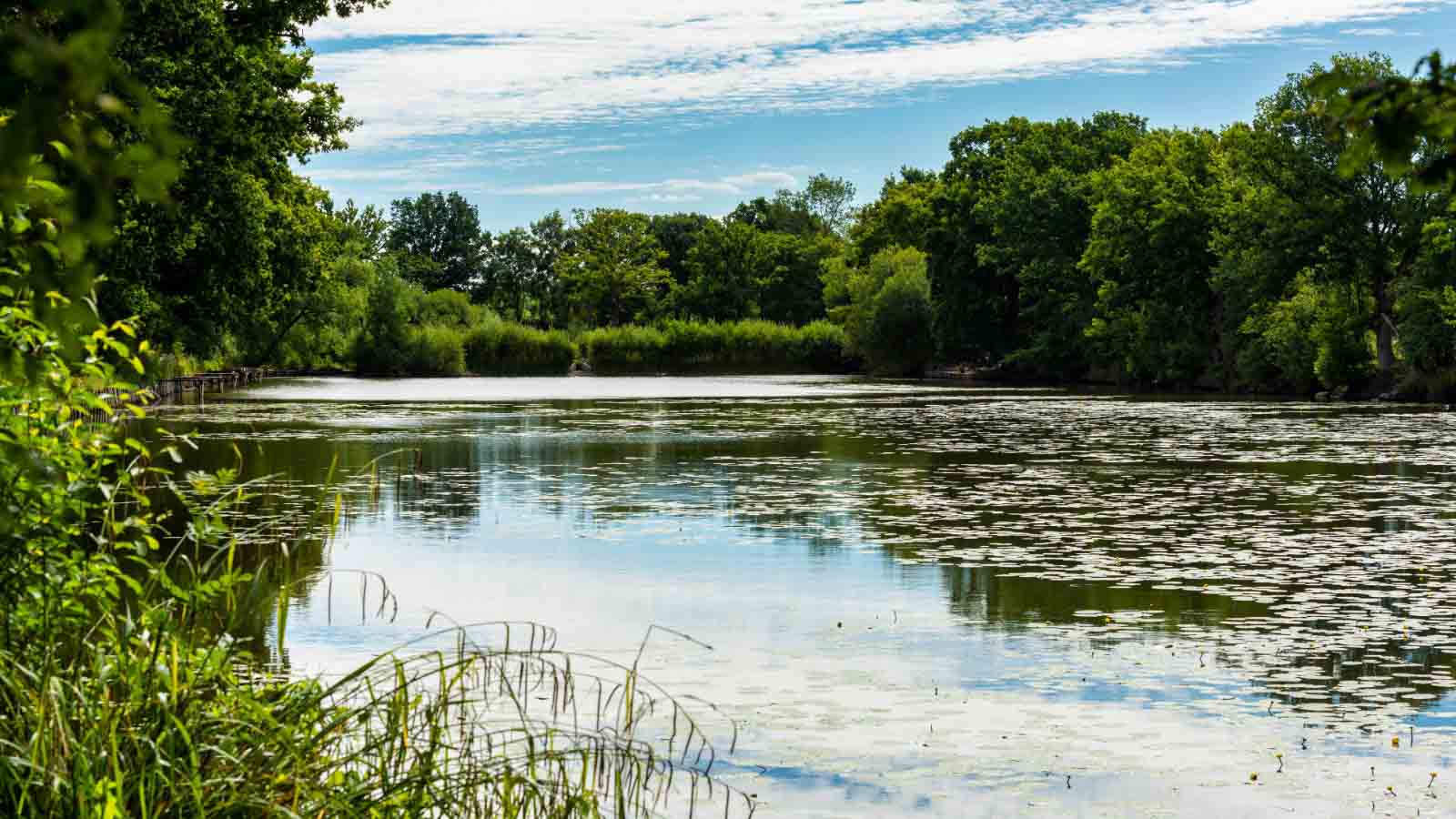
Just west of Tonbridge lies Haysden Country Park, a remarkable landscape of lakes, woodland, grassland, wetlands and the River Medway. Covering around 65 hectares, the park combines wildlife, recreation and fascinating modern history within easy walking distance of Tonbridge town centre.
Haysden Country Park at a glance
| Feature | Key fact |
|---|---|
| Location | Lower Haysden Lane, Tonbridge, Kent TN11 9BB |
| Size | Approximately 65 hectares / 160 acres |
| Main waters | Barden Lake, Haysden Water and the River Medway |
| Habitats | River, freshwater lakes, woodland, marshland and grassland |
| Nature status | Local Nature Reserve and partly designated for local nature conservation importance |
| Green Flag | Green Flag Award park since 2006 |
| Walking routes | Eden Valley Walk, Weald Way and local trails |
| Cycling | Regional Cycle Route 12 links Tonbridge, Haysden Country Park and Penshurst |
A landscape created by nature and people
At first sight Haysden Country Park appears to be a completely natural landscape. Its lakes, woodland and waterside paths feel far removed from the nearby town.
The reality is more unusual. Much of the landscape visitors enjoy today was shaped significantly by industrial activity and flood management during the twentieth century.
Before the Country Park
The surrounding Medway Valley has always been closely connected with water, agriculture and transport. The River Medway runs through the park and historically helped shape the development of Tonbridge itself.
The low-lying floodplain also meant that flooding was a recurring feature of life around Tonbridge and the surrounding valley.
How gravel extraction created the lakes
During the twentieth century, large-scale sand and gravel extraction transformed the landscape around Haysden.
Gravel extraction took place particularly between the 1960s and 1980. Once extraction ceased, the excavated areas filled with water and became important features of the modern park.
Barden Lake and Haysden Water are therefore not simply ancient natural lakes. Their modern form is closely connected with the industrial history of the area.
Some of the most peaceful wildlife habitats at Haysden today developed from land dramatically altered by gravel extraction. Nature subsequently colonised the lakes, banks and surrounding ground.
The great Tonbridge flood
Severe flooding in 1968 had a major impact on Tonbridge and demonstrated how vulnerable the town was to the River Medway.
The disaster led to major flood-control works upstream. The Leigh Flood Relief Barrier, together with a flood storage area and new river channel, became part of a system designed to reduce the risk to Tonbridge.
The barrier was completed in 1981 and remains an important part of the landscape immediately associated with Haysden Country Park.
The Country Park is born
Once gravel extraction ended, attention turned towards conserving and opening the landscape for public recreation.
Haysden was officially opened as a Country Park in October 1988.
The site later received further recognition for its ecological value, becoming a Local Nature Reserve in 2008.
Important dates in Haysden's history
| Date | What happened |
|---|---|
| Before the 20th century | The landscape forms part of the River Medway floodplain and rural countryside west of Tonbridge. |
| 1960–1980 | Extensive gravel extraction reshapes sections of the landscape and helps create the modern lakes. |
| 1968 | Major flooding causes serious damage in Tonbridge. |
| 1981 | The Leigh Flood Relief Barrier is completed as part of measures protecting Tonbridge. |
| October 1988 | Haysden officially opens as a Country Park. |
| 2006 | Haysden begins its long record as a Green Flag Award park. |
| 2008 | The whole park is designated as a Local Nature Reserve. |
| Today | The park is managed for wildlife, conservation and public recreation. |
Barden Lake & Haysden Water
Barden Lake
Barden Lake is one of the most accessible and recognisable parts of the Country Park. Paths around the lake offer opportunities for walking, resting and observing water birds throughout the year.
The surfaced routes around Barden Lake also provide some of the park's best accessible walking options.
Haysden Water
Haysden Water is a larger open-water area farther west. It is associated with activities including sailing, fishing and supervised triathlon swimming.
Unauthorised swimming is not permitted, so visitors should always follow the current park rules and water-safety guidance.
Wildlife & habitats
One of Haysden's greatest strengths is the variety of habitats concentrated within a relatively small area.
- Freshwater lakes provide habitat for waterfowl and aquatic species.
- River Medway forms part of a wider wildlife corridor through the valley.
- Woodland provides shelter, nesting areas and seasonal colour.
- Grassland creates feeding habitat and open spaces.
- Wetland and marshland add further ecological diversity.
Walking through Haysden Country Park
Haysden is particularly valuable because it forms part of a much larger network of walking routes rather than existing as an isolated park.
The Eden Valley Walk and Weald Way pass through the area, allowing walkers to continue into the Kent countryside.
An off-road route connects the park with central Tonbridge, while Regional Cycle Route 12 continues west towards Penshurst Place.
From Tonbridge Castle to open countryside
One of the most interesting ways to experience Haysden is to approach on foot from Tonbridge.
Within a relatively short distance the landscape changes from the historic town and Tonbridge Castle to riverside paths, Barden Lake, woodland and increasingly rural countryside.
Curiosities & hidden stories
The lakes are younger than they look
Barden Lake and Haysden Water appear completely at home in the natural landscape, yet their modern form is closely connected to twentieth-century gravel extraction.
An old river course survives
Flood-control works altered sections of the River Medway. The area known as The Shallows preserves part of an older meandering river course that became isolated when a new channel was created.
A woodland grew where water engineering changed the landscape
Changes connected with the Leigh flood-control works transformed parts of the park. Areas once associated with old river and weir features subsequently developed into woodland.
The quiet park has an industrial past
Visitors now come for wildlife, walking and peaceful scenery, but only a few decades ago parts of this landscape were active extraction sites containing heavy machinery.
Facilities & visiting
- Walking and waymarked trails.
- Accessible paths around parts of Barden Lake.
- Children's play area.
- Café near the main car park.
- Toilets, including accessible facilities.
- Picnic areas.
- Fishing in authorised areas.
- Cycling on the designated Regional Cycle Route 12.
The park is open throughout the year, but closing times vary seasonally. Visitors should check the official council website for current opening hours and park regulations.
Explore the story around Haysden
Haysden forms part of a much bigger historical and natural landscape. Continue exploring: