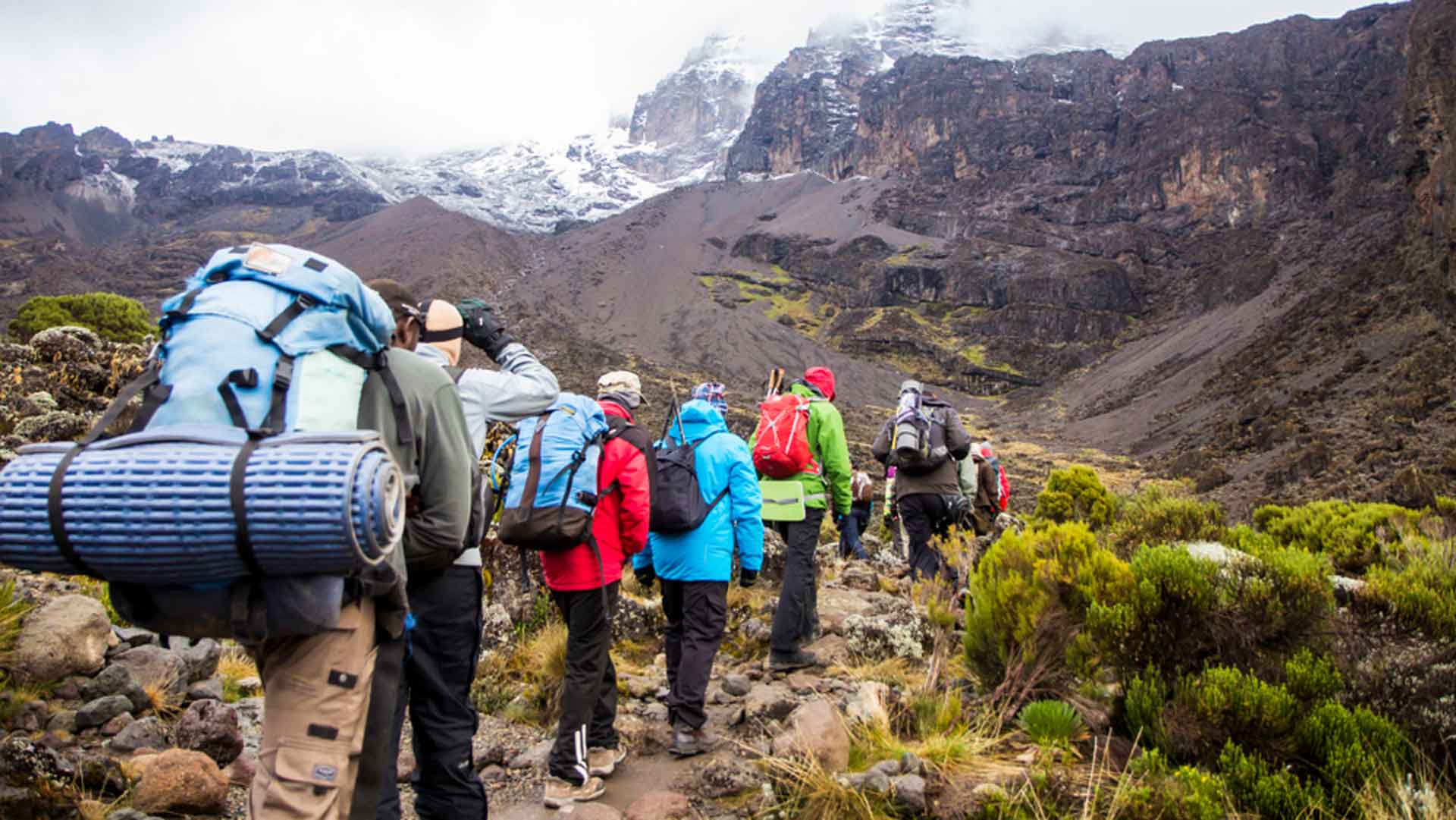
Kilimanjaro is a high-altitude expedition disguised as a trek. You do not need technical climbing skills on standard routes, but you do need smart acclimatization, steady pacing, and a disciplined mindset.
Quick facts
- Summit: Uhuru Peak (5,895 m)
- Challenge: altitude + cold + consecutive days
- Success lever: more days on the mountain (acclimatization)
- Best club approach: 7–9 days (avoid rushed itineraries)
Why Kilimanjaro feels like five worlds in one
You move through distinct ecological zones in a few days: rainforest, moorland, alpine desert, and a final summit zone where wind and cold dominate. The experience is unforgettable, but altitude must be managed from day one.
Best route strategy for a club trip
Route names matter less than what they imply: duration, acclimatization profile, crowd levels, and descent impact. For most groups, the best balance is 8 days on a camping route.
Club default recommendation: choose an 8-day itinerary (e.g., Lemosho 8 or Northern Circuit 8–9) to maximize safety and summit probability.
Route comparison (simple)
- Lemosho (7–8 days): gradual, scenic, strong acclimatization profile
- Northern Circuit (8–9 days): longest, best acclimatization margin, quieter sections
- Machame (6–7 days): very scenic, can be busy; avoid rushed versions
- Rongai (6–7 days): often quieter; good alternative for lower traffic
- Marangu (5–6 days, huts): no tents; shorter acclimatization if done too fast
Best time to go
The most popular windows typically align with drier conditions: January–February and June–October. Weather can still change rapidly near the summit.
Altitude safety: the club protocol
Kilimanjaro success is mostly acclimatization + pacing. The club should treat altitude management as a system: daily check-ins, clear red flags, and a non-negotiable descent rule.
Daily check-in (fast)
- Headache: none / mild / severe
- Nausea or appetite loss: none / mild / persistent
- Dizziness: none / mild / worsening
- Breathlessness at rest: yes / no
- Coordination or confusion change: yes / no
Non-negotiable rule: if symptoms worsen with altitude, we descend. The summit is optional. Safety is mandatory.
Training plan (10–12 weeks)
Train for durability: long walking days, leg strength, and the ability to recover overnight and repeat.
- 2 days: easy cardio 45–60 min
- 1 day: strength (legs + core)
- 1 day: hills/stairs session
- Weekend: long hike, progressively longer (with backpack)
- 1 rest day: recovery and mobility
Gear checklist (what matters most)
- Broken-in boots (not new)
- Layering system: base + mid + insulation + waterproof shell
- Warm gloves (two-layer), hat, neck gaiter
- Headlamp + spare batteries
- Cold-rated sleeping bag + sleeping mat
- Sunglasses + sunscreen + lip balm
- Trekking poles (highly recommended for descents)
- Dry bags for key items
Ethical porter standards
A Kilimanjaro trek is a team effort. We prioritize porter welfare: sensible loads, proper kit, and transparent tipping. This is part of our club’s standard.
FAQ
Is it technical? No, standard routes are trekking routes, but altitude is serious.
Why do people fail? Mostly short itineraries and fast pacing early on.
How cold is summit night? Cold and windy. Plan for winter conditions.
Disclaimer: This guide is informational and not medical advice. High-altitude trekking carries risks. Always follow qualified guides and prioritize safe decision-making.